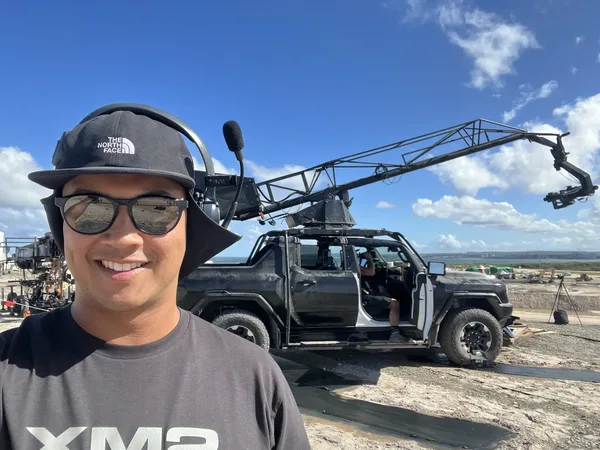
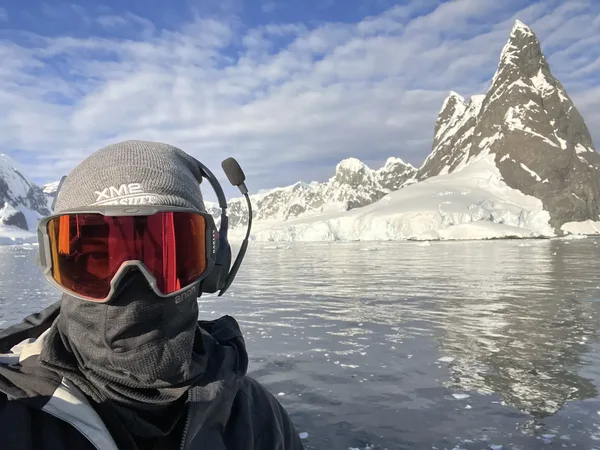
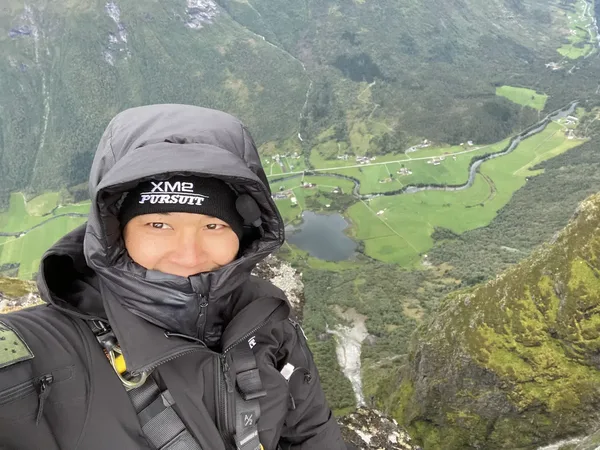
Stories, insights, and lessons from 14+ years of flying drones on the world's biggest film sets.
Industry
Why Your Hollywood Blockbuster Needs a Dedicated Drone Cinematographer
There's a massive difference between hiring a "drone guy" from a camera rental house and partnering with someone who has flown cinema drones on Star Wars, James Bond, and Fast & Furious. Over 14 years, I've learned that aerial cinematography is its own discipline—it's not just technical flying.
It's understanding how to compose shots that blend seamlessly with traditional filmmaking, anticipating weather and air traffic, and solving problems before they happen on set. When you're working with A-list directors and budgets in the millions, you need someone who understands both the creative vision and the practical constraints.
On a typical studio production, I'm embedded with the camera department. The director or DP will describe a shot, and my job is to translate that into a flight plan—factoring in wind, obstacles, sun position, and the movement of actors and vehicles on the ground. There's no second take when a stunt goes off. You have to nail it.
One thing people don't realize is how much pre-production goes into aerial work. Before I ever put a drone in the air, I'm studying location maps, weather forecasts, airspace restrictions, and coordinating with aviation authorities. On bigger shows, I'll do test flights days before the shoot to lock in flight paths and identify potential issues. That preparation is what separates a professional outcome from a risky one.
The other piece is communication. A dedicated drone cinematographer speaks the language of the camera department. I know what a DP means when they ask for a specific lens feeling or a particular energy in the movement. That translation between filmmaking intent and drone capability is where the real value lives.
23 January 2026
Technical
FPV Drones vs. Heavy-Lift Cinema Rigs: When to Use Each
The drone cinematography industry has been fundamentally transformed by FPV technology. Freestyle FPV drones can move faster, squeeze through tighter spaces, and achieve shots that multi-rotors simply cannot. But they're not a replacement—they're complementary.
Flying both FPV and traditional cinema platforms like the DJI Inspire 3 and custom heavy-lift rigs gives you the full toolkit. I use FPV for dynamic action sequences and immersive flyovers, but when you need precise control, longer flight times, and stabilized shots, the traditional platforms win. The best shoots leverage both.
FPV shines in action. Think chase sequences where the camera needs to weave between cars, through windows, around buildings. The speed and agility is unmatched. On The Fall Guy, we used FPV extensively for those high-energy stunt sequences where the camera has to feel like it's in the action, not observing from a distance.
But FPV has limitations. Flight times are short—usually four to six minutes. The cameras are smaller, typically a GoPro or RED Komodo. And the footage requires stabilization in post, either through gimbal systems or software like Gyroflow. For a slow, sweeping establishing shot with an ARRI ALEXA Mini LF, you need a heavy-lift platform with a proper gimbal.
My approach on set is to discuss the shot list with the DP and plan which platform fits each setup. Sometimes we'll fly the same sequence twice—once with FPV for the dynamic angle, once with the Inspire 3 for a wider, more controlled take. The editor then has options, and that flexibility is what makes the final product better.
15 January 2026
Behind the Scenes
Flying Drones in the Sahara: Lessons from Aquaman's Desert Sequences
Working on Aquaman presented some unique challenges that don't come up in typical film production. Sand gets everywhere. Wind patterns shift unexpectedly. There are thermal layers you have to account for. And when you're operating at the scale of a major studio production, every flight has to be perfectly choreographed.
One of the most rewarding parts of that shoot was developing techniques for maintaining camera stability in extreme heat while flying long takes over complex terrain. Desert conditions push both the operator and equipment to their limits. Batteries drain faster in heat, motors work harder, and the fine sand particles are relentless on moving parts.
We developed a workflow specifically for the environment—sealed motor housings, compressed air cleaning between flights, and a battery rotation system that kept packs at optimal temperature. Sounds simple, but in 45-degree heat with a full crew waiting, those logistics matter enormously.
The thermal layers were the real wild card. In the middle of the day, rising heat creates invisible columns of turbulent air. Flying through one mid-shot can introduce vibrations that ruin the take. We learned to time our flights around the thermals, shooting the most critical aerial sequences in the early morning and late afternoon when the air was calmer.
Safety coordination on a production like Aquaman is incredibly detailed. Every flight plan goes through the AD, the stunt coordinator, and the safety officer. You're operating near actors, practical effects, and sometimes pyrotechnics. There's no room for improvisation—everything is rehearsed and locked in before the cameras roll.
8 January 2026
VFX
From Cinematography to VFX Data: The Second Life of Drone Footage
Not all drone flying is about capturing the hero shots that make it to the screen. A significant part of my work involves VFX scanning—using aerial photogrammetry, drone LiDAR, and terrestrial LiDAR to create 3D data that VFX teams use for digital environments.
I've done this work for Lucasfilm, supporting both The Mandalorian and Ahsoka. The level of precision required is completely different from cinematography. You're flying specific patterns, maintaining exact altitudes, and capturing overlapping frames that can be stitched into point clouds and meshes.
The way it works is straightforward in concept but demanding in execution. You fly a grid pattern over a location at a set altitude, with each photo overlapping the previous one by around 70-80%. The software then matches features across thousands of images to reconstruct the environment in 3D. Any inconsistency in altitude, speed, or overlap means gaps in the data.
What makes this particularly interesting is how the data gets used downstream. A VFX supervisor might need a digital version of an entire valley to extend a set piece. Or they'll need precise measurements of a building facade so they can add CG elements that match the real location perfectly. The accuracy of my scan directly affects the quality of the final visual effect.
Studios are investing heavily in this because it's more efficient than traditional methods. Rather than sending a survey team to manually measure and photograph a location, a drone can capture an entire site in a few hours. The 3D data is then available to every department—VFX, art, pre-vis—from day one of post-production.
1 January 2026
Career
From Competitive Swimming to Hollywood Drones: An Unlikely Path
I was a national champion swimmer in my younger years—trained hard, raced at the highest level. I thought that was going to be my life. But sometimes the best careers are the ones you don't plan. I started importing toys and selling them in shopping centres, then moved into RC helicopters, and somewhere along the way drones took over everything.
The RC helicopter scene in Australia was small but passionate. I got deep into it—building, tuning, flying, competing. That hands-on experience with flight dynamics and mechanical systems turned out to be the perfect foundation for what came next. When multi-rotor drones started emerging, I already understood the fundamentals.
Co-founding XM2 was the turning point. Three of us saw that the film industry was starting to need professional drone operators, and we believed we could execute at a level that didn't exist yet in Australia. There was no roadmap—we figured it out as we went. Early jobs were small. Local commercials, real estate shoots. But we kept pushing for bigger work and proving that drones could deliver cinema-quality results.
The first major Hollywood production changed everything. Once you've proven yourself on a studio film, the referrals start coming. One DP recommends you to another. A producer remembers your work and brings you onto their next project. Fourteen years later, we've flown on Star Wars, James Bond, Pirates of the Caribbean, Mission Impossible, The Fall Guy, and dozens of other productions across seven continents.
Looking back, the swimming taught me more than I realized at the time—discipline, performing under pressure, the ability to push through discomfort. Those same traits apply directly to operating on a film set where the stakes are high and the margins are thin.
25 December 2025
Technical
Achieving 661 km/h: The Guinness World Record and What It Taught Me
In 2023, Ben Biggs and I set a Guinness World Record for the fastest battery-powered drone at 661 km/h. It was an incredible achievement, but here's what surprised me: the lessons we learned weren't just about speed. They were about precision, team coordination, and understanding the limits of technology.
Flying a drone that fast requires rethinking everything—aerodynamics, battery chemistry, power delivery, control systems. At those speeds, the airframe is experiencing forces that would tear apart a conventional drone. We went through multiple design iterations, testing different materials, motor configurations, and propeller geometries.
The safety protocols alone took months to develop. We worked with aviation authorities, set up chase aircraft, and implemented multiple layers of redundancy. Every flight had an exclusion zone, a medical team on standby, and a detailed abort procedure. When you're pushing into uncharted territory, the safety framework has to be as innovative as the technology.
Battery management was one of the biggest challenges. At maximum power draw, you're pulling enormous current through cells that are designed for far less aggressive use. We worked closely with battery engineers to develop packs that could handle the load without thermal runaway. Temperature monitoring was constant, and every pack was inspected between runs.
What I took away from the experience extends far beyond the record itself. It reinforced that preparation is everything, that the team around you matters as much as the technology, and that pushing boundaries responsibly requires respecting the physics rather than fighting them. Those principles apply whether you're setting speed records or flying a cinema drone on a film set.
18 December 2025
Industry
The Evolution of Drone Technology in Film: 2015 to 2026
When I started flying cinematography drones seriously in the early 2010s, our options were extremely limited. Heavy multi-rotors that could carry cinema cameras were temperamental, slow, and required constant tweaking. Over the last decade-plus, I've watched the industry completely transform.
We now have platforms like the DJI Inspire 3 that are incredibly sophisticated out of the box, FPV drones that can do things we could barely imagine a few years ago, and custom rigs that leverage modular components. But with that evolution comes complexity—more regulatory layers, more insurance considerations, and much higher expectations around what's possible.
In the early days, just getting a stable image from a drone was an achievement. The gimbals were basic, the cameras were heavy, and flight times were measured in minutes. Now, a DJI Inspire 3 shoots 8K with a built-in stabilization system that rivals dedicated gimbal platforms. The barrier to entry has dropped, but the ceiling for professional work has risen even faster.
FPV was the biggest disruption. When filmmakers realized you could fly a camera through a window, down a staircase, and out the other side in a single take, it opened up a creative vocabulary that didn't exist before. Entire action sequences are now designed around what FPV drones can do.
Looking ahead, I see continued miniaturization, longer flight times, and better integration with virtual production workflows. The drones that will matter most in the next five years are the ones that can feed data directly into real-time engines for on-set compositing. The line between capture and post-production is blurring, and drone technology is right at the centre of that shift.
10 December 2025
Behind the Scenes
Flying Drones on 7 Continents: Logistics, Challenges, and Unexpected Discoveries
One of the things I love most about this career is the travel. I've flown drones on productions across seven continents—Antarctica, Africa, Asia, Europe, North America, South America, and Australia. Each location brings its own set of challenges that test both the equipment and the operator.
High-altitude shoots in mountain ranges require different power management. Thinner air means the motors have to work harder to generate lift, which cuts into flight time and reduces the maximum payload you can carry. I've had to swap to lighter camera packages at altitude to maintain safe operating margins.
Tropical environments test reliability in ways that temperate climates don't. Humidity gets into electronics, condensation forms on lenses during rapid altitude changes, and the heat pushes batteries to their thermal limits. Arctic conditions are the opposite extreme—batteries lose capacity in the cold, LCD screens become sluggish, and lubricants thicken in the gimbal bearings.
Then there are the regulatory and cultural differences. Getting permits in some countries is straightforward—fill in the paperwork, pay the fee, and you're approved within days. In others, it requires months of negotiation, relationships with local operators, and sometimes creative problem-solving to navigate bureaucratic processes that weren't designed with drones in mind.
The human element is what makes international work genuinely rewarding though. Every country has talented local crews who bring knowledge and perspective you can't get from a guidebook. The best productions are collaborative—my aerial expertise combined with local knowledge of terrain, weather patterns, and logistics. That combination is what delivers results in unfamiliar environments.
3 December 2025
Career
Building Drone Pro Hub: Education and the Future of Professional Flying
After 14 years of flying on some of the biggest film sets in the world, I realized a huge gap existed: talented pilots who wanted to go professional had very few resources that actually showed them how. Drone Pro Hub is my answer to that problem.
The traditional path into professional drone work—getting lucky enough to meet someone in the industry, apprenticing, slowly climbing the ladder—is fine, but it shouldn't be the only way. There are pilots with incredible stick skills who have no idea how to approach a production company, write a shot list, or price a job. The technical flying is one part of it; the business and industry knowledge is equally important.
Drone Pro Hub is an education and entertainment platform built by someone who has actually done the work. I understand the technical depth required to operate on a Hollywood set, and I understand the business side of building a drone operation from nothing to a global company. That combination is rare, and it's what I'm putting into the platform.
The content ranges from technical tutorials—how to tune a cinema drone, how to fly specific shot types, how to manage batteries and maintenance—to business fundamentals like finding clients, building a reel, and understanding insurance and regulatory requirements. It's designed for people who are serious about making this a career, not just a hobby.
Community is central to it. The best learning happens when people share experiences, ask questions, and support each other. I'm building Drone Pro Hub as a place where the next generation of professional drone operators can connect, learn from each other, and access mentorship that would otherwise take years of networking to find.
26 November 2025
VFX
LiDAR Scanning for VFX: Why Studios Are Investing in 3D Data
The shift toward LiDAR scanning in film production is one of the most significant changes I've witnessed in recent years. Traditional photogrammetry is powerful, but LiDAR provides a different kind of data—point clouds that are incredibly precise, regardless of lighting conditions.
I work with both drone LiDAR and ground LiDAR systems, and each has specific applications. Drone LiDAR is ideal for large environments and terrain—scanning a valley, a coastline, or an open landscape where photogrammetry would struggle with repetitive textures. Ground LiDAR excels at interior spaces and detailed surface capture, where you need millimetre-level accuracy on architectural features.
Studios like Lucasfilm use this data to build digital sets, extend physical locations, and create accurate environments for virtual production. A LiDAR scan of a real location becomes the foundation that CG artists build upon. The accuracy of that scan directly impacts how convincing the final shot looks—if the digital extension doesn't match the geometry of the real set, the audience notices, even subconsciously.
The data pipeline from scan to screen is fascinating. Raw point clouds get cleaned, meshed, textured, and optimized before they're usable in a VFX pipeline. I work closely with VFX supervisors to understand exactly what data they need, because over-scanning wastes time and under-scanning means going back to location. Getting it right the first time matters enormously when you're on a tight production schedule.
The investment in scanning infrastructure has grown dramatically, and for good reason. As virtual production stages like ILM's StageCraft become more common, the demand for accurate 3D environments is only going to increase. LiDAR and photogrammetry are now essential tools in modern filmmaking, and understanding how to capture that data from the air is a skill set that's becoming increasingly valuable.
19 November 2025
Have a project in mind?
Looking for an experienced drone cinematographer for your next film, television, or commercial production? Get in touch to discuss your project.